
The Sisyphus Resolution
The Myth of SisyphusThis flow traces the transformation of punishment into ownership and of futile labor into a possible form of happiness.
increasing Bearing strength in each event
 decreasing
Bearing strength in each eventdecreasingDivine Sentence
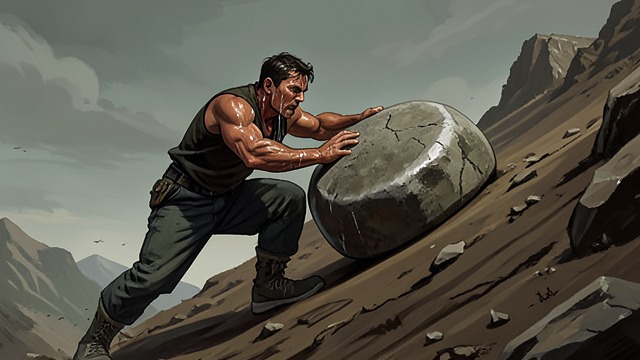
Divine Sentence
Futile Labor
Sisyphus is condemned to roll a rock uphill only to watch it fall again. The punishment represents labor stripped of progress, reward, and final completion.
Human Scale
The myth becomes powerful because the task resembles ordinary work. Its terror lies not in supernatural spectacle, but in the repetition recognizable within human life.
Defiance of the Gods
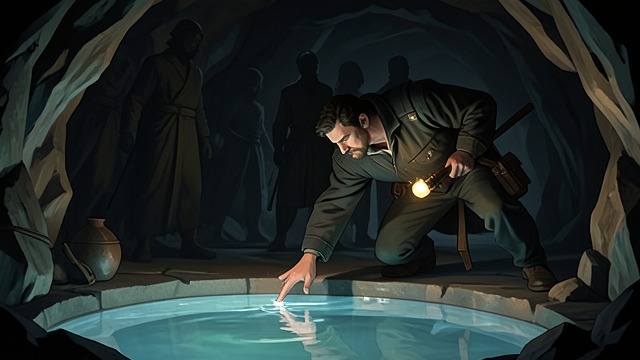
Defiance of the Gods
Stolen Secrets
Sisyphus repeatedly chooses earthly knowledge, water, and life over obedience to the gods. His cleverness turns divine authority into an opponent rather than a source of order.
Cost of Passion
The punishment is presented as the price of his attachment to earthly existence. His crime is not simple wickedness but an excessive preference for life.
Defeat of Death
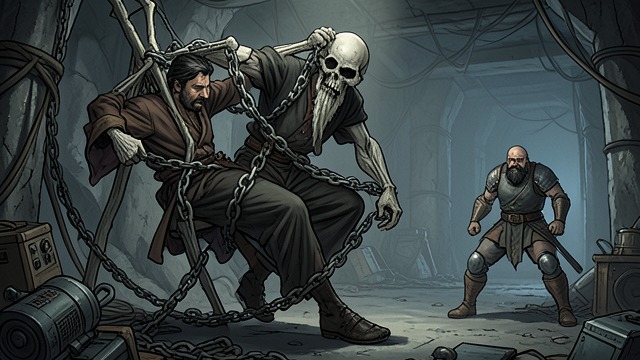
Defeat of Death
Death in Chains
Sisyphus binds Death and interrupts the normal order of mortality. The silent Underworld becomes evidence that even death can be challenged temporarily.
Inevitable Restoration
The god of war releases Death, restoring the condition Sisyphus tried to suspend. His victory therefore enlarges rather than abolishes the eventual punishment.
Return to Earth

Return to Earth
Sensual Memory
After arranging his return, Sisyphus encounters water, sun, warm stones, and the sea. The physical world overwhelms the authority of the Underworld.
Refusal to Return
He ignores recalls and warnings because earthly pleasure has become more compelling than obedience. The gods must physically seize him and drag him back.
Imagined Happiness

Imagined Happiness
Conscious Descent
Sisyphus becomes superior to his fate during the descent, when he understands the complete structure of his punishment. Awareness turns the interval between labors into a moment of freedom.
Owned Destiny
His rock becomes his own thing, and the struggle itself becomes sufficient. Happiness is not release from the sentence but lucid ownership of it.
opening of The Myth of Sisyphus
mythic background before the punishment
mythic episode before the Underworld sentence
mythic episode immediately before final capture
conclusion of the book
